Posts

Showing posts with the label Las Vegas

Visiting Agave utahensis var. eborispina in habitat
Image
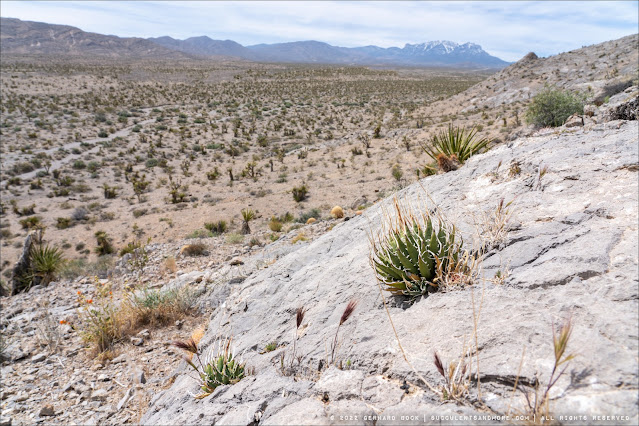
As I mentioned in my post about Agave utahensis  var. nevadensis , seeing the two varieties of Agave utahensis  native to western Nevada—var. nevadensis  and var. eborispina —in habitat was a bucket list experience. It's one thing coming across cool plants in a botanical garden or a private collection, but something else entirely being able to study them where they grow naturally.  In the case of Agave utahensis  var. eborispina , that environment is harsh in every conceivable sense of the word. It's amazing to see how well these plants have adapted. They thrive in extreme temperatures from below 0°F in the winter to above 110°F in the summer, and they make do with very little soil, sometimes appearing to grow right out of solid limestone. Agave utahensis  var. eborispina Agave utahensis  var. eborispina  differs from var. nevadensis  in leaf color (olive green vs. blue green) and length of spines: The terminal spines of var.  eborispina...
Visiting Agave utahensis var. nevadensis in habitat

Image
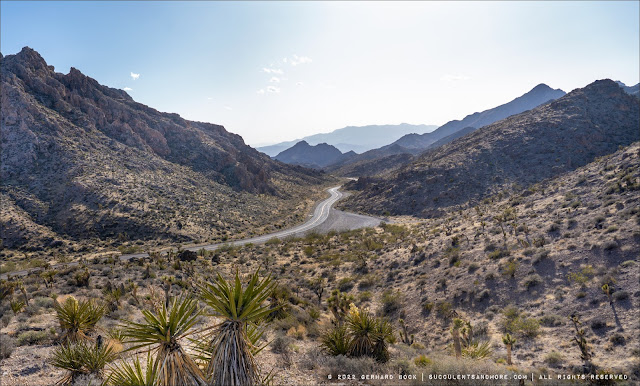
My Las Vegas trip in early April  was full of amazing sights, but my personal highlight was seeing Agave utahensis in its native range. We visited the habitats of var. nevadensis and var. eborispina , the two most sought after varieties, and seeing them growing in what most other people would consider inhospitable wasteland was a bucket list experience. Often they seem to grow right out of the limestone, with nothing but a small pocket of soil holding the roots in place. And yet, these are tough plants, thriving in temperatures that range from far below freezing in the winter to way past 100°F in the summer. All I can say is that if I were an agave, I would not be an Agave utahensis ; I prefer a decidedly more moderate climate. The drive from Las Vegas to the habitats we visited took us through beautiful scenery. In the photo below, the flat areas are dominated by Yucca schidigera , the Mojave yucca: The map below shows in broad strokes where the various subspecies and variet...